Showing posts with label Ramblings on Writing. Show all posts

Writing with music

on Wednesday, January 11, 2012
Pic unrelated, but funny.
(This is a link heavy blog post, full of links to youtube music. Just so you know; who knows, maybe you'll find some new stuff you like)

So I've always listened to music when writing. Heck, even right now I switched off my podcast to listen to music instead so I could churn this sucker out. For me, I can't write unless I have some sort of music playing in the background. Maybe it's an ADD thing, maybe it's an imagination boosting thing, maybe it's habit by this point; who knows. I do know several other authors who don't listen to any music when they write, and others that (like me) have to listen to music when they write, so it seems to be a mixed bag.

On the same vein of "mixed bag," what people listen to and whether or not it has to relate to what they are writing seems to vary as well. Brandon Sanderson listens to all sorts of stuff when writing his books (techno, video game music, etc.) that isn't necessarily related to what he's writing about. Jason, as mentioned above, tends to listen to whimsical stuff that relates to his writing, and it has to be related for him to successfully write.

Myself, I'm sort of a mixed bag. I do have a few "rules:" 90% of the time the song can't have singing or words, because then I get too invested in the lyrics rather than actually writing. I also try and pick soundtracks that relate to the subject matter at hand, and then pick particular tracks relevant to the scene, though that isn't necessary. For example, I'll pick a creepy song for a creepy scene, but it isn't necessary. I tend to mostly listen to video game soundtracks, as for some reason movie soundtracks draw me out of my writing.

I also avoid repeats across books. I make iTunes playlists for each book I write (and then never delete them because I find it entertaining to go back and remember what I listened to), and there is hardly ever any crossover. This is usually because if I listen to a song I used on a previous book, it triggers that Pavlovian response to write those characters and that setting, rather than the one I'm in. Music has to always draw me into writing in order for it to work for me, which essentially makes almost every song or soundtrack a one-time-use affair.

-----

For fun, here's a list of what I listened to when writing a handful of my novels, with links. It's interesting to see how my tastes have changed, as well as how the different sounds completely changed the style of the book.

Lacrymosa - I wrote most of this book on my LDS mission, which means most of the background noise was the Mormon Tabernacle Choir, predominantly this song because it's awesome. When I got home and finally finished it, it was mostly Rhapsody of Fire and Dragonforce. This is really the only book that broke the "no lyrics" rule, which is probably why the book is awful.

Harbinger - This book is some weird fantasy western vampire angel hybrid abomination, and it didn't really have a defined soundtrack in retrospect. I did listen to this little western number from Cowboy Bebop, if only because 1. It's from the best episode of any anime, ever and 2. It's the only western song I could think off the top of my head. Whatever else I listened to has been lost to the passing of time, which is probably for the best. Oh wait, I did listen to the opening song of Fight Club a lot for some reason. Man, that movie is awesome.

Where Gods and Mortals Dance - Ah, here is where things get interesting. This was almost 100% Epica's The Score, specifically Unholy Trinity. Now, I'm honestly not the biggest fan of Epica, but this album was a purely orchestral release of their previous songs, and it worked pretty well. I also hit up a decent chunk of Final Fantasy Tactics, which also sort of fits the mood of the book (heavy political fantasy). Overall, it was mostly mellow, fantasy-sounding tracks, which makes sense given how the book pans out.

Paradise Seekers - Haibane Renmei. Lots of Haibane Renmei because, damn is that some quality music. Also the book drew (very obvious) inspiration from the show, so I guess it fits. I also listened to Within Temptation's Utopia single about twenty billion times (all three versions), again breaking my "no words" rule. For some reason that song didn't bug me. Oh, and Nightwish's The Escapist, because it has the actual phrase "Paradise Seeker" in it that made me want to use it in some book. Please don't sue, Nightwish.

The Might of the Steelgods - This one was a total mixed bag, and I honestly don't remember most of it. I think it was mostly Super Meat Boy for some weird reason. I also had a mix of Lost Odyssey in there, as well as selections from most Final Fantasy games. Oh, and Shadow of the Colossus. Lots of that.

Effulgent Corruption - This book took like seven months, so I went through a lot of music. It was about this time I discovered the Game of Thrones TV show, which was fantastic, so I listened to lots of that soundtrack (and remixes). Then I discovered Nier (which is another dark, depressing fantasy story so hey, it fit) and listened to boatloads and boatloads of that. I also hit up a little bit of the Gladiator soundtrack for a phase, though it was mostly Nier and Game of Thrones.

The Gears of Anbar - This one was supposed to be some weird steampunk fantasy hybrid, but mostly it was me listening to Within Temptation's Iron about a billion times. Which, again, broke the "no lyrics" rule but hey...that song is a lot like Gears of Anbar. About war and being tempered and...ok I have no idea what this song is actually about but it has a kicking beat. I also did loads of the Bastion soundtrack, which has a sort of western/steampunk vibe to it. Pretty good stuff.

Death's Aria - Still writing this, but it also has a rather extensive soundtrack. I revived Nier for whatever reason, probably because I love the music. In fitting with it's gothic theme I've done a lot of Bloodrayne: Betrayal (a game which I don't own because the game was awful but the soundtrack is pretty good). I've also put some Castlevania: Symphony of the Night on there since, you know, more gothicy stuff. Nightwish's newest album, Imaginarium, only has about two tracks on it I like but the orchestration-only tracks on the special edition make great writing music for this book. Which I can't link to because technically it isn't out in the US except on digital copies. Oh well. Lastly, for the tense scenes, we are Binding of Isaac all over this place, as it fits wonderfully.

-----

Thanks for bearing with me. Hopefully you found some new music to listen to while you write. What do you listen to when you write? Do you listen to anything? Do you even like music?

2012 Writing Goals

on Monday, January 2, 2012

First things first: I don't do New Years Resolutions. They are trendy, encouraging, and everybody forgets they exist by the time February rolls around. In my never-ending quest to Be Awesome, should I find a particular character flaw in myself, I immediately set about trying to fix it. I don't need some arbitrary measurement of time for me to start bettering myself.

And now that I've sufficiently made myself look like a pretentious ass, I'm going to give you my writing goals for 2012. Because it's the cool thing to do.

This year is going to be the year I either acquire and agent, sell a book, or both. It's gonna happen. I'm not going to let 2013 show up until it does. But seeing as that's not entirely in my control, my best bet is to work my butt off in every aspect that I do have control over, which means I'm going to be doing a lot of writing this year.

Goal #1: Write every single day in 2012


I've been taking Sundays off. I'm not doing that anymore. 2012 is the year that I write something new every single day. My ultimate minimum is 250, but that is only excusable when I'm doing something else writing related on the side (planning, submitting, editing). I will put 250 words of new fiction into a Word document every single day of 2012. They might be great, they might be crap, who knows. All I know is I'm not going to stop for nothin. My "real" word count goal is back to 2,000 (I bumped it up to 2,500, but recently I've only been doing 1,500), in case anybody was wondering.


Goal #2: Submit 2+ books to agents and editors in 2012


This requires that I actually have two books that I'm confident enough to send out. This has actually been a big problem for me, mostly because I never feel like a work (especially after leaving it for a while) is good enough for anyone to want to pick it up. Currently Steelgods 1 is out, and Death's Aria will probably go out in 2012 as well. That leaves one other book (either an edited Effulgent Corruption or Where Gods and Mortals Dance or something new) to be sent out into the rejection ether. I've been really reluctant to send stuff out, and it's time to get over that. I produce new material so fast that I'm wasting potential sales because I jump to the next project too quickly. So NO MORE. Going to submit like mad this year, whether anybody wants my stuff or not.

Goal #3: Love writing like I used to


I still love to write. If I didn't, I would have stopped and just played Xbox or Super Nintendo instead of forcing myself to write. But recently it's become more of a chore, like work rather than a fun hobby. This shouldn't be the case. I started writing way back when I was a kid because I thought I had fun stories to tell. I picked it back up in 2006 because I thought those stories would be interesting enough that other people would want to read them, and I would go crazy if I kept them in my brain. I'm going to bring that back. The only books I end up writing are the ones I care a lot about. So, I'm going to write those books. If I end up writing a year of just crappy urban vampire fantasy, so be it (though the odds are low). If I end up writing some dark, emo, melodramatic crap about dead teenagers, then so be it. It's what I want to write, so I'm writing it. I'm pretty sure that if I write every day, I'm going to eventually get so burnt out that I'm going to write an awful book (or short story) that I'll never want to show anybody. But I don't care. As long as I'm having a good time, that's what matters.

Goal #4: Try writing some short stories


I don't even know how to plan short stories, so this is going to actually be pretty tough. That being said, it's something I've always wanted to try, so I'm going to give it a go. I might churn a few out in-between novels as a sort of "warmdown."

Goal #5: Write a middle-grade book


Years ago when I was a middle-grade aged person, I wrote a book called Welcome to Riverville. It was a collection of short stories about a normal kid named James and his best friend Billy, who thought he was a cowboy. Such adventures included blasting a burglar with super-soaker guns, getting out of babysitting using porcupines and some ingenuity, and rescuing a dog that had fallen off a cliff by super-gluing Billy's collection of toy rattlesnakes together to make a rope (since all the rope in the city had been used by Ms. Timpernickle in the "worlds longest ball of stuff" competition. She was off competing in the nationals when the dog incident happened).
The point is that we actually printed this thing out and bound it, and apparently my mother (who is part of a supervising group of teachers who overlook the homeschooling of disabled kids) uses the book all the time when helping her kids learn to read or reading aloud to them. Apparently it's a huge hit.
The point of this story (besides tooting my own horn) is that my mother is constantly telling me I should rewrite it and try and sell that instead of all my fantasy crap. So...why shouldn't I try writing middle-grade? I've had some ideas bouncing around for a while, and maybe I could produce something entertaining. Let's give it a shot.

Goal #6: Be Awesome


Self-explanatory.

2011 - A Writing Recap

on Sunday, January 1, 2012
Happy 2012 and all that. New year, new times, new goals, though it always just feels like the last one. Time for a recap of everything that went down in 2011, and maybe I'll do another post with my writing goals.

Writing Stuff

- From January to July I wrote Effulgent Corruption, my longest and most complex book yet. I averaged over 2000 words a day consistently over this entire time.

- In May I epublished Paradise Seekers, after a hefty edit, my first entry into the eBook world. It sold decently, though not as much as I would have hoped. The jury is still out with regard to my personal future with Kindle and eBook publication. Despite this all, it was a fantastic learning experience, both on how to edit and polish a book as well as all the work that goes into getting everything off the ground.

- In August I wrote The Gears of Anbar. It was 112,000 words in under a month, so put that in your pipe and smoke it (whatever that means). It is currently my personal favorite.

- In September and October I edited The Might of the Steelgods, though it was more of a total rewrite. It still has some cleaning up to do, but it's the biggest edit I've ever done on a work.

- For the first part of November I started Naught But Glass, but I wasn't feeling it so the project got put on hold.

- In December I started Death's Aria, though I eventually got distracted by the whole holidays thing. Work on Death's Aria resumes full force today (1/1/2012).

Convention Stuff


- In February I attended Life, the Universe, and Everything on BYU campus. It was a decent experience. Honestly I go to LTUE these days mostly to just see the local authors I like and buy their new books to support them. Luckily, there are loads of awesome local authors.

- In May I attended one day of Conduit. I was able to meet Michaelbrent Collings, whom I had been stalking on Facebook for a good while, so that was a major awesome perk. The panels were...decent. Again, another meet-n-great for local authors.

- In August I attended WorldCON, which was quite the blast. I met lots of my favorite authors, lots of editors and agents, and overall had a good time. Honestly, I feel that was a big breaking point in my convention-going career; I finally was able to speak with lots of people about both what they were working on and my current stuff.

- In October I went to World Fantasy in San Diego. This was also a fantastic experience. I was able to speak with even more agents that I'd been trying to contact for a long while, as well as the usual bunch of authors and editors. Plus, it was a lot of fun.

Career Stuff


- I finished receiving my hearty batch of Paradise Seekers rejections shortly after deciding to ePublish it. So that book is basically closed at this point.

- Paradise Seekers was published to the Kindle store and others. It saw little success, but I do not regret the experience in the slightest. As mentioned above I learned a lot, and I plan on applying this to my future.

- The Might of the Steelgods rewrite was submitted and saw more success than any of my works in the past. Several partials, one full request, and more. Honestly, I think it was a combination of actually meeting most of these people at World Fantasy and the fact that my query letter was boss hog. I decided to screw convention and just write one I thought would be interesting to read, and so far it has paid off reasonably well. We'll see what happens with that from here, as it is still out with a handful of people.

Stats? 


- I wrote 500,000 new words this year (almost exactly). This is not counting any of the Paradise Seekers or Steelgods edits. If I were to count the Steelgods edit, we'd be looking at almost 600,000 words. That averages to about 50,000 words a month, and I didn't write at all in November minus maybe two days.

- My goal I made at the end of 2010 was to write five books this year. I didn't make it; I got about two and a half with some change. I'm actually a bit disappointed in this, if only because in 2010 I wrote three books. Granted, I wrote about 350,000 words in 2010, so technically I crushed my previous word count, but the point still stands. I want three books a year as a minimum from here until the day I die, so I'm going to have to bump up my efforts (or write more YA books).

Stuff I Learned / Random Ramblings


- I like writing YA better than Epic Fantasy. YA is faster, the books are shorter, and they aren't (usually) as complicated as adult fantasy fiction. Writing YA is less stressful for me than writing adult, and honestly my writing style has leaned towards YA since the moment I started. I'm considering in 2012 going for broke and just writing tons of YA novels to see how I feel about it all. This is still up in the air.

- I do best when I write consistently, when I write outside, and when I have a writing group. Currently, I do not have an active writing group. Life has been too busy for me to actively participate in several new ones I scoped out, and the current group has been too busy to for any reading to happen. This has been a major burden on my writing and motivation. Add the fact it's winter and too cold for me to go on walks or write outside, and there's a reason I've been sluggish (this also seems to happen every year).

- Kindles are fragile. I broke my eInk one 10 days out of warranty. Amazon was nice enough to replace it for free (though all my famous people signatures are gone with it), and now I'm extra careful. I love reading on Kindles, though, more than books by a substantial amount. I will probably never go back (except for comic books and their ilk).

- I've hit a point where my intended career is frustrating me. Before I took it all seriously it was more of me just writing for my own pleasure and not caring how things turned out. Then I began to become more dedicated, determined to be the very best I could in every regard and learn everything possible from conventions, classes, etc. Now, I honestly think I've gotten most everything I need to know covered (I understand how to write, how the business works, how to motivate myself, and what I need to produce in order to succeed), and all that remains is the breakthrough. Since I am no longer seeing constant, substantial progression, things have become stressful. I'm looking at other career options as backups more seriously, and though I'm continuing to bang my head against the door of publication/success, it's no longer a passive thing. I'm ready for this to happen. I'm ready to make the changes necessary to write for a  living. I'm ready for awful edits, months and months of them, if it means seeing a book in print at the end. I'm ready, but it hasn't started yet. And so I keep banging my head in frustration, waiting.

- That being said, I've also started to regain the whole "who the hell cares, I'm just writing for my own pleasure" bit that started this whole fiasco. Death's Aria is both a fun experiment and me just writing something because I thought it would provide me entertainment. Whatever book I write after will be written because I'm completely sold on it, and I'm super excited about it. Which means it might be Steelgods 3. I love those books and the characters and their plots (and future plots), and even if nobody ends up buying them I'll still love 'em and am going to finish that freaking series because I think they are awesome. So take that and stick it in your pipe alongside whatever I told you to stick in your pipe previously and smoke it too. :P


That's it for my massive new years post. Despite me sounding like a jaded, grumpy grandpa, it's been a fantastic year for me. Total blast through-and-through, and I'm excited to make 2012 even better.

Keep on writing, keep it real.

When Infodumps Go Right

on Tuesday, December 20, 2011
This was the second image I found when I Googled "infodump." In retrospect, I'm very grateful SafeSearch was on. 

Infodumps. We all know what they are (but here's an infodump about infodumps anyway). Basically, it's when somebody in the story (either the narrator, another character, or the main character him/herself) buckles down and blabs about everything the reader needs to know. I put emphasis on reader here because a common stigma (and problem) with infodumps is they dump stuff the characters already know. Essentially, it's a paragraph, chapter, or section that focuses on explaining things that will need to be known in order for the rest of the book to progress. Usually this entails a bit of foreshadowing, a lot of expository dialogue, and loads of text while people don't do things.

A classic example is the chapter The Council of Elrond from The Lord of the Rings. Basically, Tolkien needed his readers to be up to speed on the world's events, the significance of the ring, and the exact details regarding the quest. Unlike the movies, The Fellowship of the Ring didn't start with the backstory regarding Sauron getting his finger cut off and the importance of the ring of power. While Gandalf does provide a bit of information to Frodo back in Hobbiton, it's more of a mini-infodump to tide him over until he's in Rivendell and can get the whole thing.

Growing up I hated this chapter, especially on re-reads. I already knew everything Elrond was saying, and the chapter is really really long. There is very little in terms of actual story progression: basically we are getting a history lesson that is capped off by finally saying what everybody should do. You'll note that in the movie (as mentioned above) they essentially broke this scene into two pieces: gave the history as a prologue, explained what needed to be done during the actual scene. This helped the movie flow faster.

So how do we "fix" infodumps? Well, there's several ways. The first is to just forego them completely. A clever enough writer can explain everything the reader needs to know about their world, characters, and magic through scenes and dialogue. This way the action keeps flowing without heavy explanation. The Way of Kings, despite being an incredibly wordy book, does this fantastically. The Name of the Wind, despite having several scenes set in schools and with instructors, never falls into the trap of straight infodumping: something is always happening that caused the infodump. It's that other trope scene we all love: where Luke is being trained by Obi-Wan or Yoda, and they are actually teaching the audience lots about the Force rather than just Luke.

It's worth noting, however, that doing this wrong can make your book extremely difficult to read. Many readers like having it told to them straight; it gives them the big picture and makes everything fall into place. Having to extrapolate everything from scenes and dialogue can be difficult, especially if you are trying to cater to a younger audience, so you might have to throw in some little, more concrete infodumps as a foundation for your explanations set through dialogue and scene.

The obvious trap to avoid (as I've said already) is to just spout information about your world for a chapter without anything interesting happening. Sometimes it's necessary, and if your world is interesting enough it's easier to forgive. If you are doing it as a long dialogue, having characters interject or ask questions can also keep the pacing and make it less of "storytime for the sake of the reader." This seems to be a common problem with new authors. You have this awesome world, awesome magic, and you are just dying to let that cat out of the bag. You've waited five chapters, dropping hints and subtle references, but now you can't hold out any longer. You explain everything in great detail, your awesome ideas and fantastic world down to the minute detail, and your audience all puts your book down and goes back to playing Skyrim.


Last point: determining what goes into an infodump. Eventually, no matter how good you are, you'll probably have to give in and explain some stuff eventually. Tolkien did it, so that means it's totally legit. What isn't legit is over-explaining, or giving too much information. As stated above: fantasy writers often are planners, with grandiose visions of worlds and magics and races and all sorts of things. It's hard to restrain yourself from just explaining everything at once (after all, you are doing an infodump anyway, what could it hurt? Right?). Don't. It's a universal rule to only tell characters (and the reader) exactly what they need to know right then, and then trickle down the rest of the details throughout. Provide the foundation for the house, and maybe a few walls, but don't furnish the whole thing in one go. Give only what is needed, and the rest will come throughout the rest of the story.

-----

The only reason I brought this up is I'm in the middle of an infodump chapter in Death's Aria. I usually hate writing these. I'm bored by infodumps, and so writing them is doubly painful. However, I'm really enjoying it this time around. Questions I've had about the world are being answered (this might be the fault of discovery writing, to be honest), a stage is being set for the rest of the novel, and after the infodump is dropped the second act kicks in full swing. It's an exciting time (especially since the characters dumping all this info are interesting), and it's (finally) getting me pumped to write this novel.

The first chapters are still awful, in case you were wondering, but we'll get back to those later.

Rejection, hoops, more writing

on Tuesday, November 29, 2011
So I'm in that stage of manuscript submissions where people have requested partials/fulls, and they start rejecting those. Which, honestly, is somewhat more painful then when people just reject queries. When they reject a query at least I can blame the stupid query. When they reject an actual manuscript, that means they read it and didn't like it, which also means the blame falls on the writing itself. That can be a little rough.

There are still a handful out (some with partials, some with just queries) and I've honestly seen more success with Steelgods than any other batch of submissions, but it doesn't make the entire experience of jumping through hoops any less stressful. It also is a stronger revelation on why so many prospective authors turn to eBooks: it's aggravating to have (what you think is) a quality product only to have it halted at the various stages of approval. I can certainly see why this is beneifical: the more people that see it and are allowed to make changes, the (potentially) better the manuscript will become. But the whole notion of having to jump through all these hoops just to get through the door is aggravating, and makes the whole thing seem more of an impossible task than it probably actually is.

Not that I would know. I haven't sold anything yet; as far as my personal experience goes, it IS impossible. But that isn't going to stop me from keeping on trying.

On a more pleasant topic, my NaNoWriMo inspired vacation is going to be officially over on the 1st, and then it's business as usually. And by that I mean a blitz of writing Death's Aria in one month (or less!). I've spent a good half of November not thinking about writing at all (mostly just Skyrim), cleaning the pallet more or less. Now I'm chomping at the bit to get started again. Book number eight will be finished before the year is up, to be sure. I also consider it to be the most "marketable," to be honest, which means I might push up it's editing schedule to get it back out.

Back to a less pleasant topic: the future of Steelgods. There isn't much I've decided on yet (as I said, it's still out with a lot of people, I'm just thinking way ahead) but if nobody picks it up it makes writing the rest of the books in the series pretty much useless from a financial standpoint (unless I decide to epublish them). Because I like the story so much I honestly think I'd still go through and finish out the series, but it is a thing to consider.

That's it from me. Back to killing dragons and sniping mammoths from the top of a mountain.

Effulgent Corruption: The Home Stretch, emotional impact, death of charcters

on Tuesday, July 12, 2011
I've wanted to use the phrase "on the home stretch" for a while now with Effulgent Corruption, but could never justify it considering I'd always have more than one Part remaining.
Well, I'm on the home stretch. I have one Part left. It's outlined. I just have to write it.
I'm on the home stretch.

After outlining what will become Part 7, I realized how much I didn't want to write this finale. It has nothing to do with being unable, hating the story, or anything of that kind. The point is that things happen in the end that are irreversible, and after getting to know these characters over seven months (more, if you count plotting and the first false start) I am a bit hesitant to follow through. Who lives and dies (or is horribly maimed) at the end of Effulgent Corruption was decided WAY back during the book's initial planning (even before it had a title), but now that I'm finally up to that point it's hard to follow through with it.

I had a similar problem with the ending of Lacrymosa (even though that book wasn't nearly as well polished, it did take me a three year period to write), the ending of Harbinger, and the ending of the second part of Where Gods and Mortals Dance. 


Without going into too many spoilers: all the parts mentioned above have the deaths of main characters. I've always been forward in saying that nobody is ever safe, even viewpoint characters; it's been something I've been adamant on since I first started writing. I despise immortal viewpoint characters who seem to have immaculate luck and narrowly avoid death by just a hair every scene. Death is a staple of fantasy, so why are main/likeable characters exempt?

Because it's hard, that's why.

Part 6 also ends with a main character dying. For risk of spoilers, let's just say it is "one of my favorite characters in the novel." I literally had to emotionally detach myself from the scene entirely in order to write it. I went back for a quick re-read edit and actually skipped the part leading up to the death. I just couldn't re-read it, at least not then. I was so attached to the character and liked him/her so much that killing them was like a punch in the chest. I still haven't re-read the scene. And this was for a character I'd planned to die since the beginning!

As an author, we want deaths to have emotional weight. So we build up a character, make them endearing to a reader, force them to be very sympathetic, and then kill them.

The only problem is, as the author, I'm infinitely more intimate with a character than a reader. They've spent maybe a few hours with him/her, while I've spent months (sometimes years) entertaining them in my thoughts. Doing awful things to characters is my forte (which is also what discovery writers excel at), but even I have a threshold that can be crossed. George R. R. Martin can do awful things to people without batting an eyelid, but I think most of us are more like J.K. Rowling, who cried during several stages of writing the Harry Potter novels. It's hard to be mean, especially to people who are good and don't deserve it. There isn't always a happy ending, but there's a difference between being told about the unhappy ending and having to create it.

In truth, this whole post was sort of an extension of a comment I posted on Rose's blog, but the point still stands. I'm having troubles starting this "beginning of the end" because I know I'm going to have to do awful, unfixable things to my characters, and I feel bad about it.

But it was going to happen anyway, so I'm going to write today regardless.

I was also going to post about moral grayness in characters (and melodrama), but that'll have to wait for a future blog post because my brain is addled with Mountain Dew and work isn't helping with my mind mushiness. So just know that the end is coming, this book will finally be finished, and I'm going to kill every character you ever loved or do awful things to them (or both). So ha ha.

Also, a new tradition is to post a picture or youtube video relevant to something, so here's the final boss music from Nier. I posted it before, but it changes just before you deal the killing blow, which I think is a great example of emotionally attacking a player/reader before a character death.


And why not, here's the original song in case you forgot.

Writing: On Location

on Wednesday, June 1, 2011
This is gonna be a weird post. I'm going to talk about WHERE I like to write. I don't mean like...the worlds I write in. I mean where I plant my butt when I'm writing. I'll also talk about how I brainstorm, which I actually am going to talk about first. This is what happens when an ADHD person tries to write a blog post.

HOW I BRAINSTORM: BY WALKING AROUND


Yes, this is actually how it works. As everybody here knows, I don't plan much in advance. I never, ever outline in an actual "document" setting (though I do have outlines, scenes, and basic plot structure in my head. I just never saw the benefit of putting it to paper unless I was afraid I'd forget it). I also have severe ADHD, as mentioned above, which means usually the stuff is up there, just jumbled. How do I sort it all out? By walking around!

Back when I lived in south Provo, walking around was basically how I figured out Where Gods and Mortals Dance, Paradise Seekers, and the initial ideas that became Effulgent Corruption. We lived in a butt side of town, but we were kind of on an "island" sidewalk-wise; I could walk about a quarter mile around my apartment and end up back home in about 15-20 minutes. We also lived right across from a cemetery, and it is my greatest regret I never actually took my laptop and wrote in there. Can you imagine the creative juices?

Anyway.

Now I live on a big fat, heavily urbanized hill. Which I guess isn't much different than my urbanized south Provo, except I actually have to walk up something. Frequently when I'm stuck I go on a walk with my wife around the block for about 15-30 minutes and just talk book. If you don't have a spouse, you can do the same thing but talk to yourself, except you might look a little crazy. But hey, you are an author, so you are crazy by default.

This has actually been a huge boon to me over the years. Often times I think writers (or at least me) feel cramped and repressed working in a dark, confined area. I swear it's like I'm banging my head against the computer sometimes hoping something good comes out. Going outside and just thinking about my novel without worrying about writing it is a huge help. Granted, if you are the person who has to write down ideas the minute they come to your head, you might want to bring a notepad or something.

So yeah, go outside people. There's a great, beautiful world out there with fresh air. Now get to it.

HOW I WRITE: BY SWITCHIN' IT UP


So I have a confession: I own way more computers than I should. Yeah really. But here's basically where I write:

1. On the desk with my desktop/Mac Mini. I actually prefer to do edits here rather than writing, because it's the only computer with an actual mouse and keyboard which makes moving quickly easier.

2. On the couch, feet on the coffee table. I write on the fat, old Macbook Pro here, which overheats and roasts my legs. This is my "default" writing position.

3. Anywhere I darn well want, because I have a netbook. This was probably the best writing investment thus far, and if you don't have one you should look into it. For a couple hundred you can get a decent machine (mine was $200 and I Hackentoshed it). It'll run word, wikipedia, and iTunes, so what else do you need? I got one particularly because it had a larger keyboard than most netbooks (93% a regular keyboard size, so I don't get hand cramps at all).

I've been writing outside on the porch, but I kind of...don't like that. I love writing outside (it's a new thing I discovered), but I also want to not be next to a house (and a lamp that attracts all the bugs in utah). Luckily, there is a big grassy hill with rocks right across the street, and magically my WiFi, which can't go like one floor upstairs, can somehow reach all the way over there. I wrote a fat chunk of Effulgent Corruption yesterday outside, sitting on a rock on a hill, enjoying the evening air while listening to Gladiator. I should probably post about the music I listen to, but that's another post.

POINT:


THERE IS NONE

So my advice to you, dear reader, is thus: go outside. Grab your laptop and go to the park. Go somewhere without internet (Derek, I'm lookin' at you). Force yourself to get off the web and into the real world. Then write, with the sun and the birds and the wind and all that good crap. Trust me, it'll be the best thing you ever did. I'm going to (assuming the weather permits) go to that rock across the street and write every day from now on. I already write daily, but I have a feeling that will help immensely. Seriously. Do it.

And buy Paradise Seekers (ha, you thought you got a whole blog post without my obnoxiousness didn't you? WRONG!)

Effulgent Corruption: Back in Black

on Monday, March 14, 2011
A little over 2k today, I'm back in the groove. A few things of note that don't really matter to anybody reading but I'm going to say them anyway because then I'll remember.

- I'm going to have to go back and add a chapter (and add a bit on the front of another chapter) between two others to make the second part flow better. I don't want to make this dumb thing any longer (it's already huge), but it cheapens a rather dramatic scene to not have proper build up, so I'm going to go back and add build-up. You won't even know it happened and that it's all artificially added after the fact. So ha!

- I beat Pokemon White. So I should have a vast increase in productivity. Theoretically.

- Part 2 is almost done. I'm guessing I have three to four chapters total left (including the one I left out). I'll probably go back and add that chapter tomorrow, then close out the part on Wednesday. I'm guessing it'll end at about 120k, making part 2 around 50k. I've said it a billion times but here I go again: this book is going to be huge.

- On that note, I'm already considering what exactly to trim and what to keep. Editing Paradise Seekers was good for me because it taught me that sometimes it is necessary to rewrite entire sections or cut entire chunks of book. The other major edit my books need is the "loose ends" edit. Often I mention things that I intend to bring up later, but since I discovery write the item didn't stick so it just...is there. Paradise Seekers is full of them, and Steelgods STILL has one that drives me crazy that I missed in editing (calling a non-Graffiting hand an "off hand" at the beginning of the book and NEVER USING THE TERM AGAIN EVER). Anyway, the point of all this is that I'll be both cleaning up and trimming.

- On THAT note, the part that I currently think needs the most revising is actually the part my writing group just finished. All I've submitted thus far was rewrites/reedits of what I wrote back in July when I first attempted this thing. Because of this, I've found the prose can be strong but the actual pacing doesn't match the rest of the book. It's slower than the YA, but not THAT slow and exposition heavy. I'm going to attempt (after finishing) another re-edit, and if it still doesn't work I may just scrap it all and rewrite it all dry (much like I did for the first 3 chapters of Paradise Seekers).

- Despite this [Effulgent Corruption] being huge, I still feel like I'm rushing through it. Drake's first part ends a bit too fast for my liking (though in a re-read I may consider otherwise), and Ciara's is just racing like wildfire. I'm sure I'll hear the other end from the readers ("It's too long!"), but I can't shake the nagging feeling there should be more stuff happening before the part's climax/conclusion. Ah well, pacing. I'll figure it out.

- I'm scared to set a goal, but I think I will anyway: End of April I'll need to be in part five at the latest. Part six is the last part, so I want this done by end of May. If I'm super amazing I'll be done by end April, then I'll have a month off (where I'll probably edit and submit Steelgods) before doing a June binge write (just like Paradise Seekers was last year).

I'm glad to be writing again. I also have a feeling my job (which I am taking calls for the first time tomorrow, then actually doing the job next Monday) will allow for a decent amount of free time. I've already decided that I'm going to write at least 1k at work a day, and try to devote all down-time writing as well. We'll see how much I can actually get done.

That's it from me. Time to go critique some writing group stuff.

Part 1 is almost done, but first...a random blurb about eBooks!

on Tuesday, February 8, 2011
eBook hate completely blows my mind.

Yes I went there and I'll keep going there. I follow a plethora of blogs starring editors, agents, and authors, and nearly ALL of them make at least one post a week on the evils of eBooks. Next to nothing is positive regarding these things, a few even going armageddon on me and saying books are dead and gone and nobody will ever read paper books again and publishers are going to go under oh noooo!

This reminds me of how something else started all those years ago...anybody remember that?
Perhaps it isn't weird to me because of my age bracket. I was born as the digital age hit full swing (or the "internet" portion of the digital age, anyway). I own a plethora of modern technologies. I play video games, and I don't buy retail boxed PC games anymore ever (I buy them all off the internet). I also never buy CDs anymore. My wife and I both own Kindles.

But parts of this gives me a bit more perspective, I think, than others. This is because I've had direct influence using the internet to try and market independent material on the two main fronts other than books (games and music; I haven't sold movies yet), and all I've seen are positives. Here are the examples:
1. My brother has been part of indie bands for years (both my brothers, actually). Their vast market comes from either local gigs selling cds, or promoting their stuff online through facebook (MySpace back when it was relevant). They got so popular they were able to tour the US and stay in fans homes across the nation. If they hadn't marketed their stuff on the internet, they'd be restricted to local only. The internet helps independent lables.
2. For a stint in High School I made indie video games with a pal Eric (who also helped with the planning of what became Lacrymosa, my first full fantasy novel). While we never charged for these games, combined total they got somewhere around 10k to 20k downloads. That's 20,000 people who have looked at at least one of my games somewhere across the world (And that tracking was just on one site; I didn't bother checking the stats from other sites). Also if you look at the game industry you can see indie developers making mad bank (the guy who made Minecraft, for example, is a millionaire now, and the game isn't even out of beta) or getting hired on by big companies.

Other examples could be Justin Bieber who (despite my loathing of his work) was picked up because of a youtube video, and others. Sure the ratio isn't bad, but it still happens. The internet is the key to distribution for PC games and music now. When was the last time you bought a CD? That's what I thought.

The point behind all this is that people wailing doom about eBooks need to realize something: IT ISN'T GOING TO STOP. The Music Industry thought it could kill it...heck, they even sued 12-year-olds for millions of dollars for sharing songs on Kazza. But despite all the crying and screaming, they found they had to adapt. iTunes came alone. Then the Zune store. Next thing you know, CDs are being bought less, but he industry isn't suffering because of it. It just took longer for it to happen.

Games, luckily, embraced it (probably because most gamers are more up-to-date on how technology and commerce can interact). Stream (basically iTunes for games) made over one billion dollers over the holiday season alone. And while some game developers still insist on selling hard copies (and filling them with anti-piracy measures that do more harm than good), Steam has become what I would imagine is close to the most profitable online distribution source ever (the only one I could think would even get close would be iTunes).

 So here are your options. You can fight it, claiming books will be gone forever (like we are going to make a huge fire and burn books, basking in the pyre's glow as we read our satan-created Kindles) and complain as you are dragged unwillingly into the inevitable future. Or you could embrace it (unlike the music industry, like the game industry) and find yourself profiting from adapting early. Are publishers going anywhere? Are game publishers gone because of indie games? Are record labels gone because of MySpace, Facebook, and iTunes? Of course not. They just adapted to this modern age where, sometimes, people want to read a book now rather than driving to the store and getting one.

Book sales will drop, yes, but they won't disappear. I have a feeling they'll level out, and the loss can more than be made up by eBook sales. Things will change, but that is the nature of the beast. You can't very well shut off the internet; the change to eBooks will happen whether you want it or not. Ball is in your court whether you embrace it and profit or get dragged kicking and screaming.

Blogging instead of editing because ITS MY LIFE AND I'M IN CHARGE

on Friday, October 15, 2010
WOO.

*cough*

Been doing school and Starcraft 2, mostly. I figure I deserve at least a little break right? No?
Editing is going atrociously slow, which is really, really bad. Tomorrow I might binge and try to get a good half of the novel done. Again, this isn't major edits (minus perhaps the two "suckage" chapters), but it's enough to clear some continuance issues (like I discovery write and what I think of at the beginning doesn't always translate to the same thing at the end) and get it suitable for an audience that won't just poke me and say, "you spelled this word wrong. Idiot."

I was thinking about how a lot of times I've written stuff, only to go to the movies/buy a game/read a book and find bits of my ideas that were so unique when I thought them up in this stupid thing I've watched/played/read. Then I realize that, since the bastards beat me to it, I'm technically the poser now. What gives! The whole Paradise Seeker is secretly The Maze Runner suffered from that, but there are still a lot of bits that correlate unintentionally.

Now I know nothing is wholly unique. Pretty much anything you write is going to steal bits and pieces from other works. Truthfully, one's entire artistic experience could be considered a patchwork of all the media he/she has ingested, and then you sort of blenderize it, throw in a dash of your personality, and BAM, witches brew of your next book. That being said, I don't think people care much if they are reading the same book over and over (if they did, we'd only have like two books), but they certainly can tell if you blatantly ripped something off.

I'm just frustrated because Steelgods coincidentally had a lot of really, really weird crossover with an anime show. I actually only watched 10 minutes of the damn thing, and over six years ago no less, and still there's weird stuff. Ah well, I'll fix it eventually. If I end up caring.

Not writing sucks. Editing is a decent placeholder for that vacancy, but it is hardly substantial. I'm considering just taking Canyon Story (not the real title) and just barfing out a quick 50k thing without any planning allowed at all, just to see what it becomes. It'll probably suck, but an idea dump wouldn't hurt, and then I'd at least be writing something.

Maybe I could even try sci-fi. That would be new. Except I have no idea how to write sci-fi. That could certainly be interesting.

Well, I've blathered for a while. Enough talk, have at you!

If you aren't the protagonist of a YA novel, you are an idiot.

on Friday, July 23, 2010
Here's another rant, because they are fun and require less of my brain. The lack of brian usage, however, doesn't mean this is any less true. So, here we go.

I've read a lot of YA recently. The Maze Runner, Forest of Hands and Teeth, I Am Not a Serial Killer, The Hunger Games etc. My wife has also torn through a lot and talked with me about them (she just finished the Uglies "trilogy"), so I am well informed about that to. In all this, I have discovered a trend that actually sort of pisses me off in most modern YA novels. No, I'm not talking about "distopias," though those are certainly all the rage these days (next to vampire/monster teen romance novels). I'm taking about the fact that your protagonist always, no matter what seems to fall into one of these two categories:


1. Super genius who has the one key to saving the world and everything, and usually it's something everybody else overlooked. Also, everybody else is a moron.


2. A complete idiot who thinks she (it's usually a she) isn't popular, but for some reason boys won't leave her alone, except the one boy who she wants. She's also a totally dense idiot but somehow is completely special in every single way. It's like her very existence is an oxymoron. 

As you can guess, #1 usually ends up with distopians, and #2 ends up in those fluff romance monster crap. Let's focus on #1 first.

This is really starting to bug me to the point of making lots of YA unreadable. I'm perfectly fine with a protagonist being competent. Heck, I despise novels where the person the author decides to be the main character is, in fact, a nobody. Why are they the main character then? I don't to hear about Timmy Twoshoes who picks his nose and just can't save the world today.

So, we go the opposite direction completely. We have main characters who are insanely, ultra competent. So competent, in fact, that they can't possibly ever do anything wrong. They are super geniuses in everything they do, making it very easy for readers to Mary Sue all over them (more on that later).

But, even this isn't enough. What if somebody else in the world is almost as smart as them? Well, they've taken care of that problem: everybody else is a complete idiot. Sure, they may look like they can take care of themselves at first, but truthfully they are about as smart as brainless monkeys.

Example time!

In The Maze Runner, we have our main character, Thomas. He's thrown into some creepy maze place without any memories, a weird past, and a bunch of kids who are more "YMCA" than Lord of the Flies. Everybody's been in the maze for like two-three years, and they've been running the maze and writing maps of the ever-changing maze outside this whole time. However, in all this nobody has figured out anything minus basic survival tactics. Seriously, it's like none of them had ever been to school before (which is funny, considering the final plot twist).

But, never fear, retarded sub-characters: Your protagonist is here! Thomas immediately starts trying to figure out what's going on. At first the retarded side characters keep shutting him down  (everybody just tell him it "isn't important" or to "not ask questions," which was probably one of my biggest complaints about the book). Luckily, Thomas is like a rogue cop who plays by his own rules, so he goes off and just does whatever the crap he wants. Of course, the morons want to punish him, but they can't  because he's the protagonist. Within a week, Thomas cracks the code a group of 30+ geniuses have been working on for two years, solves a bunch of other riddles, uses the painful method of memory-unlocking for something useful rather than just going insane.

So, in the end, it's all about Thomas and how he fixed everything, and how everybody else sucked. Interesting? Sure. Realistic? Not even close.

Round two, a book that is also extremely popular: The Hunger Games books!

Ok, these things are super popular, so I might get some hate for this, but they totally have the #1 YA protagonist syndrome. Badly. The only difference is in this one, they add another character (Peeta) who is surprisingly as competent (if not more so) than Katniss (the main character). However, this doesn't stop the fact that it fits snugly in #1, and even lingers in #2 a little bit (mostly in the second book).

Katniss isn't anything to extraordinary, if the initial few chapters of the book are to be believed. She's good with a bow, can hunt well, and that is about it. So, when she gets selected for the Hunger Games (basically an arena where a bunch of kids run around killing each other), it doesn't seem like she has an enormous chance. Especially with like all the "pro" kids (called "careers") team up in one huge group to hunt down the rest of them. Basically, Katniss is screwed.

Except for some reason she isn't. Kat makes a friend (who quickly gets killed) and then is off on her own. She runs into Peeta again, but he's hurt, so she has to both take care of him and herself. And, huge surprise, the girl who we believed had no chance just can't die. Even with all the weird things that are suddenly thrown at her time and time again, she survives with hardly a scratch. In the final situation, she impulsively manages to pick the one option that can "beat" the games. Just like that. Like magic.


Book two (Catching Fire) starts with a switch from #1 to #2, mostly by throwing the "love triangle" thing in. Katniss doesn't think she's all that special, but the two boys in her life do. Suddenly, Peeta becomes the super, impossibly competent one, and Katniss gets thrown around by her emotions. This changes, of course, in the second half, but not by much. They go (small spoiler) back to the Hunger Games, but this time Katniss doesn't seem to do much of anything. Everybody else figures stuff out, and Katniss just sort of sits around until it's over. Occasionally she shows a flash of extreme competence, but usually she is just lead around. #2.

I can rattle off a few more like this. In the Uglies books, she starts a #2 and becomes a #1 right quick. In I Am Not A Serial Killer, he's very much a #1 (though Dan Wells manages to make us believe it is feasible). Ender's Game, with Ender in a school of geniuses but he is a super genius, is very much a #1. Until Ender's Shadow, where we learn Bean is the real super-genius (#1). Weird, he didn't come off like that when it was Ender's story...

Then you have Twilight, which is very much a #2 (until the 4th book, where's she's some weird hybrid between #1 and #2. She becomes a vampire but magically has no setbacks? What?). Forest of Hands and Teeth, very much a #2. Eragon books, so much a #1 (Mary Sue all up in that).

It's the YA syndrome! Everywhere!

Heck, even Paradise Seekers falls into this trap, somewhat. The difference being the other kids don't care about solving the puzzle, but that's just an excuse I'm using to justify my story. It's the same problem; Sam is a #1, and everybody else acts like idiots.

Somebody needs to fix this. Write a character that has flaws, but not a billion flaws. Write a character who is competent, but not freaking like a deity. Fix this, people.

Why Discovery Writing is the Best Writing Method Ever

on Tuesday, July 20, 2010
As you can see from the title, this is another one of those things where I "pretend" to be better and smarter than you, and state some extremely questionable and debatable opinion like it's fact.
I put "pretend" in quotes because, deep down, everybody knows I'm never wrong and agrees with me anyway. Anybody who argues is just playing the devil's advocate for the sake of playing the devil's advocate. Because I'm right. As usual.

And with that out of the way, on to my rant.

It has often been said there are two types of writers: Discovery Writers and Planners. Of course, we all know it isn't that black and white; these are more of two ends (with pure discovery writers and pure outliners capstone-ing the sides) and everybody falls in the middle gray spots. However, people often tend to lean more towards one or the other (I've never met an author who fell directly in the middle), and whichever side they are closest to is the one they claim their affiliation with. It's much like political parties; most people aren't 100% republican (except maybe my grandmother) or 100% democrat; we fall somewhere in-between when you get down to the nitty-gritty.

However, all you outliners really need to get with the program, because discovery writing is way better for the story. Or, at least, I'm going to point out some things that benefit from that process of writing. Maybe, if I'm feeling particularly generous, I'll throw a bone to outlining as well and post some positives, but don't hold your breath.

----------

Why Discovery Writing is the Best Ever (For Reals)
By Nathan Major


POINT 1: Characters are more realistic in discovery writing


People don't usually plan what they say. Ok, that isn't completely true - I plan like the next sentence or two in a conversation - but there is still a level of spontaneousness in conversations. Things don't always go the direction people want, people get off on tangents, etc. In the natural flow of conversation it is just that: a flow. It isn't meticulous or plotted out. It just happens.

Which is why discovery writing works better for this than outlining. Many authors outline conversations or plans, have ideas for exactly what everybody is going to say long before the words come out of their mouthes. Is this good? Well, sure, all the info gets there. But the spontaneousness of being in the characters and seeing how they respond to each other is lost. Conversations just work better.

This can be applied to more than just talking, of course. People don't often react rationally to situations. In fact, in crisis or frantic situations, people usually do the wrong thing. However, if the author has planned out a scene for months down to every detail, it might show in their character actions. People might do something a little too well thought-out when the sudden plot twist appears, rather than react realistically. Is this a terrible thing? Not really; it certainly makes a person seem more competent. But it also makes them less human and more pre-planned robots.

Which brings me to my blanket statement: Characters in outliners' books are robots, characters in discovery writers' books are real people. FACT.

POINT 2: A Discovery-Written Book is More Exciting and Spontaneous


You know what is boring? The Council of Elrond chapter in Lord of the Rings. Yes, I'm hating on what might be the greatest fantasy book ever, but every time I re-read that book I skip that chapter. You want to know why it's boring? Because it looks really good on paper or an outline, but in execution it is just a slogging infodump.

Ok, that isn't completely true, I actually don't mind that chapter anymore. And also, bashing J.R.R. Tolkien is just asking for trouble. But the point is, a lot of things that seem great when planning are actually quite boring. Or, as stated in POINT 1 above, when the execution for scenes happen, the results can be very stale. Due to overplanning and this need to follow an outline, all the life has been sucked away from a scene. Nothing seems spontaneous and new; it was all just a huge plan.

Discovery writers don't have this problem. When you write as a discovery writer, you are bombarded with cool ideas all the time. It's like having ADD, only it actually makes sense (which, I sure wish my ADD made sense sometimes). You can do whatever you want, blast whatever twist you want, make people weird or crazy or exciting. It all seems natural and totally ballin' (that's the technical term, for the record), and your readers are just caught up in the excitement and action. There are few boring spots because, who plans that far ahead? If there is an infodump, it is often interspersed into an exciting scene or crazy setting. The pace is kept fast; nobody ever sits down in a discovery-written book for more than like five minutes. They are...

POINT 3: The Main Characters are WAY More Proactive


People sit around a lot in books. I hate that. That's why I usually read YA, because the length constraint makes it so stuff is always going on. In most Epic Fantasy, people sit around all the time. And, hey, guess what? Most long-winded Epic Fantasy guys are planners, and YA authors are discovery writers. That's a huge generalization, but it's also 100% fact because you read it on this blog and I am a creditable source, like Wikipedia.

Anyway, people don't sit around in discovery written books. Usually, this is because the author projects themselves onto the main character, which means they keep doing stuff throughout the story without letting up. We write because our world is boring. There are no dragons, magic, princesses, or any of that stuff. We are sitting in some desk in a room, staring at a screen, putting words on a page. So we want those to be exciting words. We want adventure and action that we can't have in real life. So, if you are discovery writing, your protagonist soaks up the world he or she is in. He doesn't bumble around and go to meetings, he shoots monsters in the face and does cool magic. It doesn't let up.

POINT 4: It's More of a Challenge


Discovery writing is hard for a lot of people, even discovery writers themselves. Being able to sit down with very little (we secretly do plan a reasonable amount, just not meticulously) and just rely solely on imagination to do the job at your beck and call is a huge amount of faith. Lots of outliners sit at a desk with pages strewn everywhere, maps, pictures of various flora and fauna of their magical world, family trees, all that garbage. If you discovery write, often you have to remember all that stuff in your head, or make up something completely plausible on the fly. That's not easy; that's tough. Especially if you gave a title to nobility in your novel, and every time you need that word you can't for the life of you remember it! (curse you, Effulgent Corruption!).

Planners have like four years of research to lean on. If they get stuck, they can just pull out chapter 34 and write that instead, because it's already planned ha ha. But you know what? You are just a wimp. Real men write with nothing.

POINT 5: Discovery Writers Finish Books


Let's be honest here: everybody plans their first book. Nobody just sits down and starts writing. They write because they've had the BEST IDEA EVER (tm) for the past six years, and they are FINALLY WRITING THEIR MASTERPIECE (tm). They get pumped, tell all their relatives about their new career, and decide they are real authors now. 


Then they write one chapter and never write any more. They just keep planning.


Forever.


This is the plague of most outliners (Jason, I'm looking at you): they plan too much. They plan their "masterpiece." And they keep planning it forever. It'll never be perfect, it'll never have the best magic system, it'll never be ready to go. It'll be so close, but it won't ever hit that point. This is probably because, as time passes and you read more/different stuff, your opinion of what is the BEST IDEA EVER (tm) changes, and thus your outline changes to accommodate. So, you write like one book every five years, or one book ever, and then you are done.


Discovery writers look at this problem and laugh. We don't get stuck on maps or graphs or city names that have to all fit perfectly. We just make them up as we go! It's called being creative, and we can do it on command. That's because we are better (see Point 4) at doing hard things, like putting words to pages. You outliners are good at planning things and then not carrying out those planes. I'm sure you'll have a nice seat in congress one day. 


POINT 6: Discovery Written Books are Shorter and Less Boring


Yeah, see, we don't have to put every little detail from our plannings in. We don't have to cram all those cute, detailed histories you spent years laboring over into our books. Often planners want to show all these little bits of garbage they've put together over the years. If not IT GOES TO WASTE!

So, you write 500,000 word books that just drag on and are so full of wordy worldbuilding we want to use it as a cure for insomnia.

Discovery written books have a fast pace because they are written fast paced. They don't have slow starts or boring middles, because no discovery writer would subject themselves to that. They don't bog up in the politics of dwarves or the nobility of elves, because we don't plan all this useless crap and therefore don't feel obliged to throw you into the infodump quagmire. We keep it fast, fresh, and exciting. We want you to keep reading, so we do it that way. And so, our books are more readable.

POINT 7: We can just sit down and write, without having to go through "foreplay"


Ha, see that little sexual innuendo up there? I discovery wrote that. That's because I'm witty. 


Anyway, that's the point: outliners can't just sit down and write whenever they want. They can't just pop out something super-fast. If they are given a writing prompt, they can't just "have an hour to write," they need more. They have to go over details, plans, characters, city names, distances, geography, language, religion, all this crap. It just goes on forever, and that spontaneousness or satisfaction of just sitting down for an hour and writing the entire hour is a sweet, delicious fruit they'll never taste.

Discovery writers, on the other hand, just sit down and go. They don't get bored of their books, because they never have to plan. If they do get bored, they can just add stuff to make it more exciting. If they say to their spouse or significant other, "I'm going to go write my book for a few hours," they actually have something to show after it instead of a map or some family tree. They get it done, and get it done fast. No messing around, straight to business every time.

Which also means if you have people who want to read something new every day, then they'll have something. I don't think your readers want to look at your boring pictures of a city's market district. Boring.

------------

So, there is a bunch of things that are good about discovery writing. Secretly there are a few "bad points" to discovery writing people have brought up. I use quotes, again, because it just isn't true: no real discovery writer has these issues. But, for those making the switch to the better writing style might have these problems (probably carried over from writing with inferior technique the past six years. Six years for one book, I might add), so it might be good to throw them out there.

SUCKY PART 1: You Can Get Stuck


Pulling imagination on command can be a huge pain in the butt, and often times it just doesn't happen. Had a bad day? Writing is gonna suck, if not be impossible. Unsure of where stuff is going to go at all? You'll probably write 500 words and give up. Discovery writing requires a very malleable and commendable imagination; if you don't have it, writers block will kill  you.

Outliners don't seem to be plagued with this. If they get stuck, they have an outline to lean back on. I imagine it like this: Discovery writers, when approaching a chapter, have a big block of clay that is just a huge blob. They have to turn this into something, with no basis at all. Outliners, on the other hand, have it already in a shape (such as a person or an animal), they just have to fill in the details. They have a place to start, and so getting to the end can be easier.

Of course, we all know this is BLATANTLY CHEATING, but it is something worth mentioning.

SUCKY PART 2: The Endings Can Be Huge Messes aka Foreshadowing Problems


As stated, most discovery writers do plan a little (that whole "not black and white" thing above). No human can expect to write something good just pulling it out of the hat. We have to have a spark or muse, something that made us write. Often, this is a particularly compelling scene, setting, etc. that prompts us to write the story (like, say, magic that kills you).

The problem is, that means a lot of the other planning is forgotten, so when you get to the end your book might turn into some trainwreck. Final twists aren't foreshadowed. Characters go all crazy. The ending is totally forced. Twists come out of nowhere. What started out as a cool, exciting concept completely falls into the nut-house and it becomes evident that the author really wasn't sure what was going on.

I don't have this problem, mostly because I'm a superior being, and also because the ending is the first thing I usually figure out before I put fingers to keyboard. But some people don't.

And that can totally ruin your book. Having one or two cool ideas that show up in the middle is nice, sure, but that can't carry a novel. Just because the girl's boyfriend is a vampire doesn't mean the other 99% of the book is worth anything. Because of this, twists (as stated above) seem forced, not foreshadowed, and whatever "Aha!" moments there might have been die.

Outliners, obviously, don't struggle with this. They might have this problem in the planning stages, but nobody sees their notes (unless they sell them on eBay or something). By the time they are writing, all these issues are ironed out; their skeleton is stable, they just have to put meat on the bones. If they can make it past Point 5 above, then they'll usually run through it without too many hiccups.

SUCKY PART 3: You have to edit it like 20,000 times


As said above, once you finish your book, it probably has some wrinkles, and these are usually larger for discovery written books rather than outlined books. Of course, this means you have to do the worst thing ever: edit. And not just edit, rewrite. Chapters get completely nuked and new ones fill their spots. Characters get nuked and new ones are added. Things you thought were "OMG SO COOL" at one point are just hindrances and you have to go Old Yeller on them.

And you don't get to just do this once, you have to do it a lot, because you probably messed up a lot.

So, truthfully, you are doing your "planning" after the book is done. You have to figure out the world, how everything fits together, etc. after the rough draft is on paper. Outliners just do it before. It's the idea of the guardrail on the cliff vs the ambulance at the bottom. Outliners have the guardrail. Discovery writers rely on a lot of band-aids.

However, I'll go so far as to say that usually, even with all the required editing, the time spent from start to finish is usually shorter than outliners still. Outliners still have to edit, just not as drastically. Plus, if the outline is terrible (you'd think you'd run it by your writing group before writing it), then you might be in the same boat as discovery writers. Still, it is a common theme among discovery writers that editing is going to happen. A lot of editing.

And I hate me some editing.

----------

So, there you have it. Discovery writing is far superior to outliners. If you are one of the sinners, I think you should try and give the other side an attempt. Write a chapter without planning it. See how it turns out. And, when it is inevitably better than every other thing you've written, feel free to send me gifts in the form of money via PayPal for opening your eyes to this better way of writing.

If you keep outlining...well...I look forward to reading your book.

Ten years from now.

Book Covers - Some Favorites and Not So Much

on Thursday, July 8, 2010

Since we are still talking about book covers, I thought I'd make a post about some book covers I like. As stated in my previous post, I consider a title and cover to be one of the most important "hooks" a novel can have, when it is sitting on that boring old shelf at the bookstore. Again, went to Barnes and Noble yesterday, and it was clear some awesome covers stuck out, and some not-as-awesome covers made me just not care.

So, first, let's go by some authors!

Brandon Sanderson


Brandon has had some...really odd covers. First print Mistborn is too easy to pick on, so let's just talk about his first novel, Elantris. 


So, here we have the US cover. Not bad, right? It doesn't scream "generic fantasy," but a casual observer has no idea what's going on. That's what bothers me a lot about covers: in order to know what is going on, you have to get a good 1/3 through the book. But the cover is there for people who don't know what is going on to be enticed. So, in that vein, wouldn't something artistic work better?
Hot damn! This is the German Elantris cover, and I often consider it the best of his (out of all his covers). Elantris is about a cursed city. This cover is simple, clean, easy on the eyes, and gets the idea across. It also looks cool. However, there is another Elantris cover that is also pretty rad...

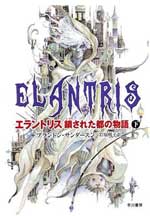
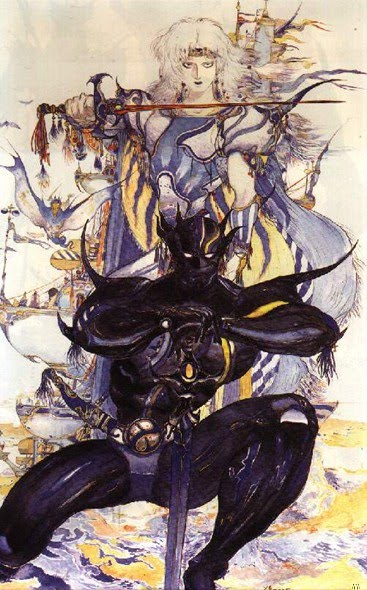
This is the Japanese Elantris cover. You can see the regional art style influencing it; it has a somewhat "anime" flavor. Plus, there's some weird rodant thing in the bottom right. I don't remember that being in the book. But dude: look how cool Prince Raoden looks! He's like a total badass! Though he does remind me of Cecil from Final Fantasy IV...


Ok, so Elantris has some good covers. What about some awful ones? Pretty much all the Warbreaker covers were pretty ugly.
This is the US release of Warbreaker. Truthfully, it's a decent picture, and I like the colors. The font looks like it was just done using a generic photoshop filter, and Sanderson is starting that whole "my name is bigger than the title" thing that people do when they get big. The problem with this cover is that it just...doesn't make sense. The first thing I thought when I saw it was, "Oh look, it's Storm from the X-Men eating a Fruit-by-the-foot." Seriously. It looks just like that. But somebody thought it was a cool idea, because the audiobook took the fuglyness to a new level.

Ignoring the fact that GraphicAudio advertises it as "A Movie in your Mind!" (hooray for brain invasion!), this picture is essentially like the first Warbreaker cover, except drawn by someone who graduated with an undergrad in pastels. There's just too much crap in this picture. Though, I do like the dress on the girl (I forgot her name; I kind of repressed Warbreaker from my mind). 

But none of this compares to the current (?) Warbreaker cover, or at least the one they are advertising.
I dunno if this is a placeholder or something, but holy crap. I don't think I need to tell you why this cover looks awful. It should be pretty freaking obvious. 

Robert Jordan 

I've never liked the Wheel of Time covers, except the very first one. This is for the hardcover books. They've had the same artist throughout, and the usually depict some unknown scene from the book, and usually it involves them standing around or doing nothing. Seriously, not very exciting. Plus, since the series started like a billion years ago, what was popular for fantasy covers then just doesn't fly now. But, they still use the same guy (guess he signed some deal?) so we won't see the end of it until Brandon finishes the series.

This, however, is excluding the audiobooks. Let's take a look at just one of them, The Shadow Rising.

Well, out of all the Wheel of Time covers, this one at least has nice colors. You have two guys hanging around, smoking, while the woman is cooking. Yeah, ok, it's a bit of a sexist cover (why are the guys standing around while she does all the work? Shouldn't they at least be fighting baddies or something?), but there isn't anything (minus the blatant sexism) that leaps out at you. Compare this to the audiobooks, which all have totally different covers from the regular books.
Holy. Crap. There's Mat, who was previously just sitting around and making a woman cook for him, and is now walking in front of some gnarled old tree with ravens and a HUGE FREAKING SPEAR on his shoulders, looking totally badass. In fact, all the audiobook covers look significantly cooler than their hardcover equivalents. Wow. 

Jim Butcher

If you've been to a store recently, you've seen Jim Butcher's books. All the covers are pretty much the same: the artist picks some background color theme (yellow, green, blue, etc.) and then puts a dark, brooding Harry Dresden in front, staff in hand, hat on his head (he doesn't ever wear a hat!), and with a black background. If you think these get a little repetitive, at least they don't print the original covers anymore. 
Ugh. Look at that title. Each letter is in its own box? That looks freaking awful! All the way up until Proven Guilty (if I remember correctly), they used this style on the covers. It looks terrible. Just look at any of the reviews I've done, and you can see how much better it looks.

Before we move on, however, I'd like to point out a Dresden cover that I really like, a lot. It is actually the book I'm currently reading, and it has stuck out with me before I even started considering the series. 
Now, this isn't much different from the other covers. Brooding Harry, with hat (ugh), and staff, obnoxious SciFi channel logo on the cover...all accounted for. However, you'll notice something completely different: THIS COVER IS WHITE. That's right; every Dresden book up until this point has been black themed, but this is the only white cover. Imagine, looking on a bookstore shelf. You have piles of black Dresden books, and suddenly this one lunges at you like an bastard child. It's brilliant. As of now, there is no other Dresden book that is white, though the next one (Ghost Story), which is a start of the new Dresden "season" is white. Are the next 12 Dresden books going to be white now? Except one, that will be black? I'm really thinking about this too much. 

James Dashner

As a person, I like James Dashner quite a bit. He's got a sort of reserved, biting sense of humor that I totally enjoy. Having him on panels at Conduit and during his guest visit in Sanderson's class last Winter was a real treat. He pointed out then some of his book covers, and I'd like to pull up this horrible gem from his first series. 
This just screams small publisher. Some generic kid's face (who gets flipped and put on the other side for the rest of the series' covers), and some generic landscape they probably googled and then slapped on the cover. Not to mention the title "A Gift of Ice" blends a little too well with the gray snow behind it, while the Jimmy Fincher Saga on top is orange for some god-only-knows reason. Ugh.

Then, he wrote The Maze Runner, and now has a big pool of money a-la Scrooge McDuck. 
Yeah, it's an ok cover. Having the "James" and "Dashner" not line up perfectly gives it a modern feel, as does the odd font. The background picture is OK, though you have to look twice or three times to figure out what is going on, which I never thought was a great thing. Luckily, the foreign rights people knew how to make a cover totally awesome. 
Holy movie poster! It even has a tagline: "Remember. Survive. Run." As we are a nation raised on media, that title is certain to grab you. 
As a bonus, recently posted on Dashner's blog, we have the Brazilian version, which looks straight out of some horror novel. 
Creepy. Though I think "movie poster" up there is still the best. 

John Bellairs 

As stated in my review, The Face in the Frost is one of my favorite books ever. The image I used in the review I considered to be an ok cover...it has an "early 90s" feel to it, but hey...it works. What doesn't work is the re-issue cover, that looks putrid.
Way to take my favorite book, and make it unappealing in nearly every way. This one is worst than the Jimmy Fitcher book above...they didn't even bother blowing up the background image to fill the cover. This doesn't even look "small publisher" bad...it looks "self published" bad. Bellairs deserved better.
Luckily, the picture on the audiobook is totally rad. 
Yeah, there you go. Some sweet wizard looking in the green-glass paperweight and seeing a freaking skull. Plus, there's that cool mouse in the back. I never did figure out what that guy's deal was. Keep in mind, it was this cover, solely the cover, that caused me to pick up the audiobook fromt he library in the first place. So there's gotta be something there. 

Orson Scott Card

I'll be honest: I'm not a fan of Mr. Card's work. I love his writing for the Living Scriptures cartoons, and Ender's Game  and Ender's Shadow are great. I just don't like anything else he wrote (including the rest of the Ender series). 

So, Ender's Game is a great book. But it has never had a good cover. Here's the one it had when I picked up the book (I totally grabbed it by random when I was like 12, by the way. Nobody suggested it; I just thought it was a book I would read). 
Not bad. Plus it has a bunch of awards on it. However, I've read this book like 20 times, and I still have no idea what scene this is from the bok. Is this Ender flying to that space station at the beginning? Or maybe the one at the end? Or maybe on his super emo-journey at the very end so Mr. Card could put out more sequels?
One thing I do know is that it is a billion times better than this cover they put out a while back, when I guess they decided to try and market the book to kids. 
Out of all the terrible covers I've posted, this one is my personal "most despised." Ender's Game is a dark book, about kids playing super-violent games and adults purposefully manipulating them to make them into soulless, killing tacticians. This looks like something out of Tron starring that kid from The Sixth Sense. It makes it look like fun, never mind the fact that they were shooting each other, swearing and intimidating each other constantly, and pretty much being put through kid hell. Just looking at the cover makes me want to punch whoever green-lighted it. Ugh.

Dan Wells

Yeah, these are primarily Mormon authors. I'm Mormon too, so it happens. Shut up. 

Dan's book first made it big in the UK, and while I thought the cover was ok, it was uninspired. 
I didn't think the US version was much better. It lost that super bright, eyeball burning red that just sears into your brain, but it also got really boring.
Better? Yeah. And there's some blood. But...why is it on a sheet of lined paper? What's up with that? No clue. 

Then, Wells US cover artist got CRAZY good, and released two of my favorite covers ever.
Wow! These look great! Mr. Monster is my personal favorite (very minimalist, but surprisingly dark), and I Don't Want to Kill You also looks really fun.


A few more
Here's a few more random covers I think look cool. Some are from books I've read, some not. I just like them. 


Got some favorite covers? Let me know in the comments!